

Mobula alfredi
Photo: Celia Coleman
What to look for
A huge diamond-shaped ray with a wide mouth at the front of the head, two paddle-shaped lobes either side of it, and a short tail with no sting. The underside carries a pattern of dark spots that is unique to each animal, which is how researchers tell them apart. A manta feeds by swimming open-mouthed through plankton, often looping back through the same patch.
If one comes by
Stop, stay low and let it come to you. Mantas are curious and will circle a still diver; a chasing diver just sends it off. Never touch the wings: the mucus layer that protects their skin rubs off. Photographs of the belly pattern can be submitted to Project Manta, which tracks individuals along the east coast.
Where to see it
Dive with us to see it
You might also see
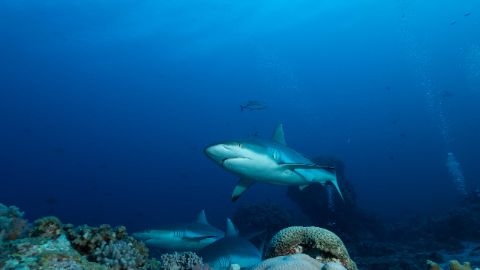
- Grey reef sharkThe classic reef shark: a stocky grey patroller of walls, drop-offs and current points, often in groups.
- TrevallyBigeye trevally schooling in a slow silver tornado, and giant trevally hunting the reef edge.

- BarracudaSilver schools that hang in the blue off the bommies, sometimes hundreds thick, with a few solitary big ones.
