
Through the cave
The cave has a deep entrance on the seaward side at about 24 metres, where clouds of bullseyes hang in the gloom, and a shallow entrance at about 12 metres fringed with pink gorgonian fans. In between are vertical chimneys and a stretch that is completely dark, so a torch is essential.
Surge moves a lot of water through the cave, and the passage narrows in places. It is usually treated as an advanced dive and is not one for anyone uneasy in enclosed spaces.
What lives here
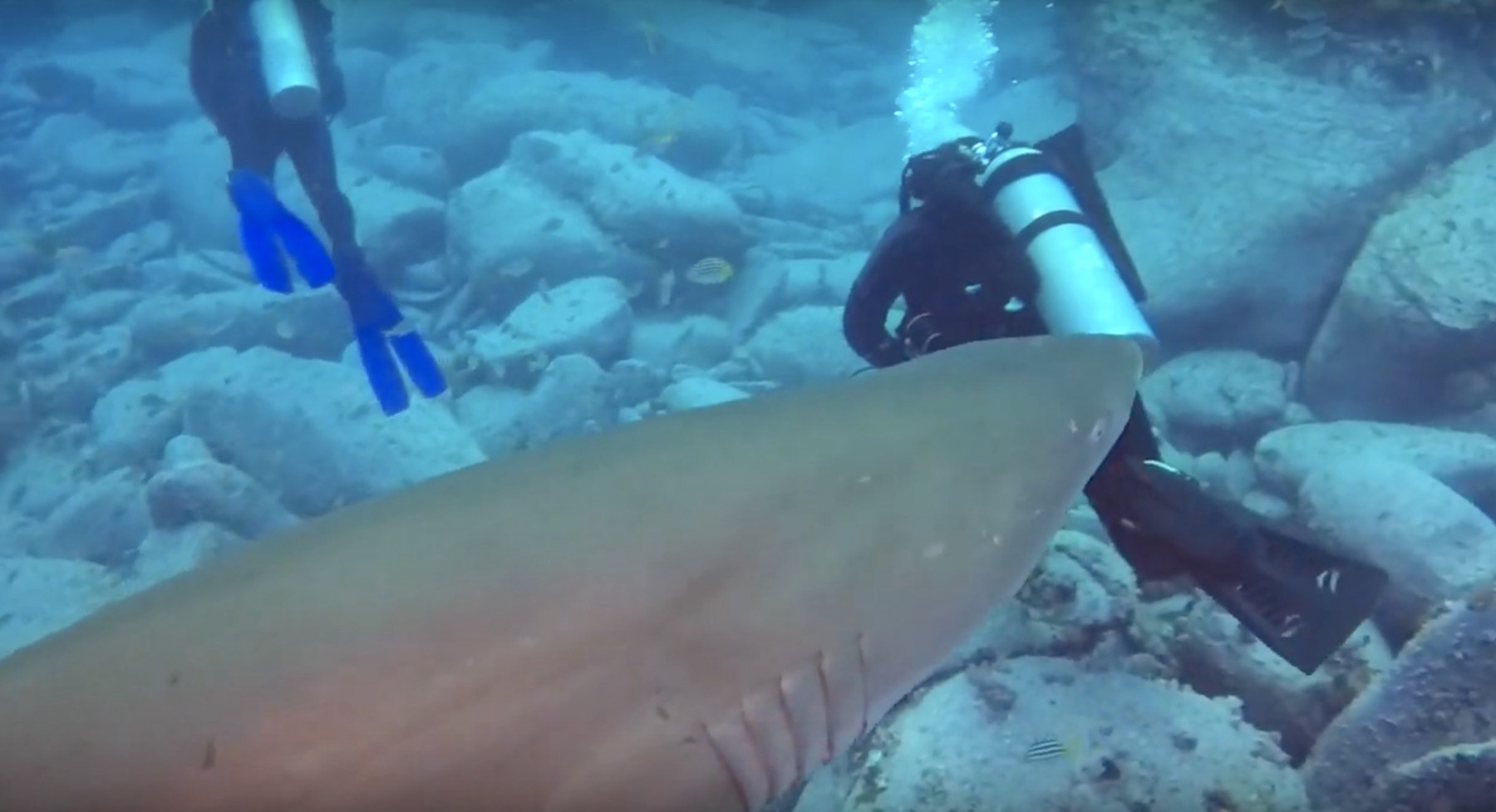
Grey nurse sharks rest in and around the cave, sometimes in large numbers, with the most seen in winter. Wobbegongs, painted crays and other lobsters, moray eels, bull rays and giant cuttlefish are common. Around the rock, look for turtles, Queensland gropers, black cod and schools of kingfish.
Conditions
Visibility ranges widely, from a few metres to around 30 metres. Water is warmest in late summer and autumn and rarely drops far below 17°C in winter, though it can change quickly with the wind.
Grey nurse shark rules
Fish Rock is declared critical habitat for the critically endangered grey nurse shark. Line fishing with bait is banned there, and spearfishing within 200 metres is limited to a short list of pelagic species. Divers must follow the national code of conduct: no night dives at critical habitat sites, don’t touch, feed, chase or block the sharks (including at cave entrances and in gutters), keep groups to ten divers or fewer, and no scooters, horns or shark pods. Check the current rules with NSW DPI before you dive.
Where it is
What you might see
- Grey nurse sharks
- Bullseyes
- Wobbegong sharks
- Painted crays
- Turtles
- Queensland gropers
- Black cod
