
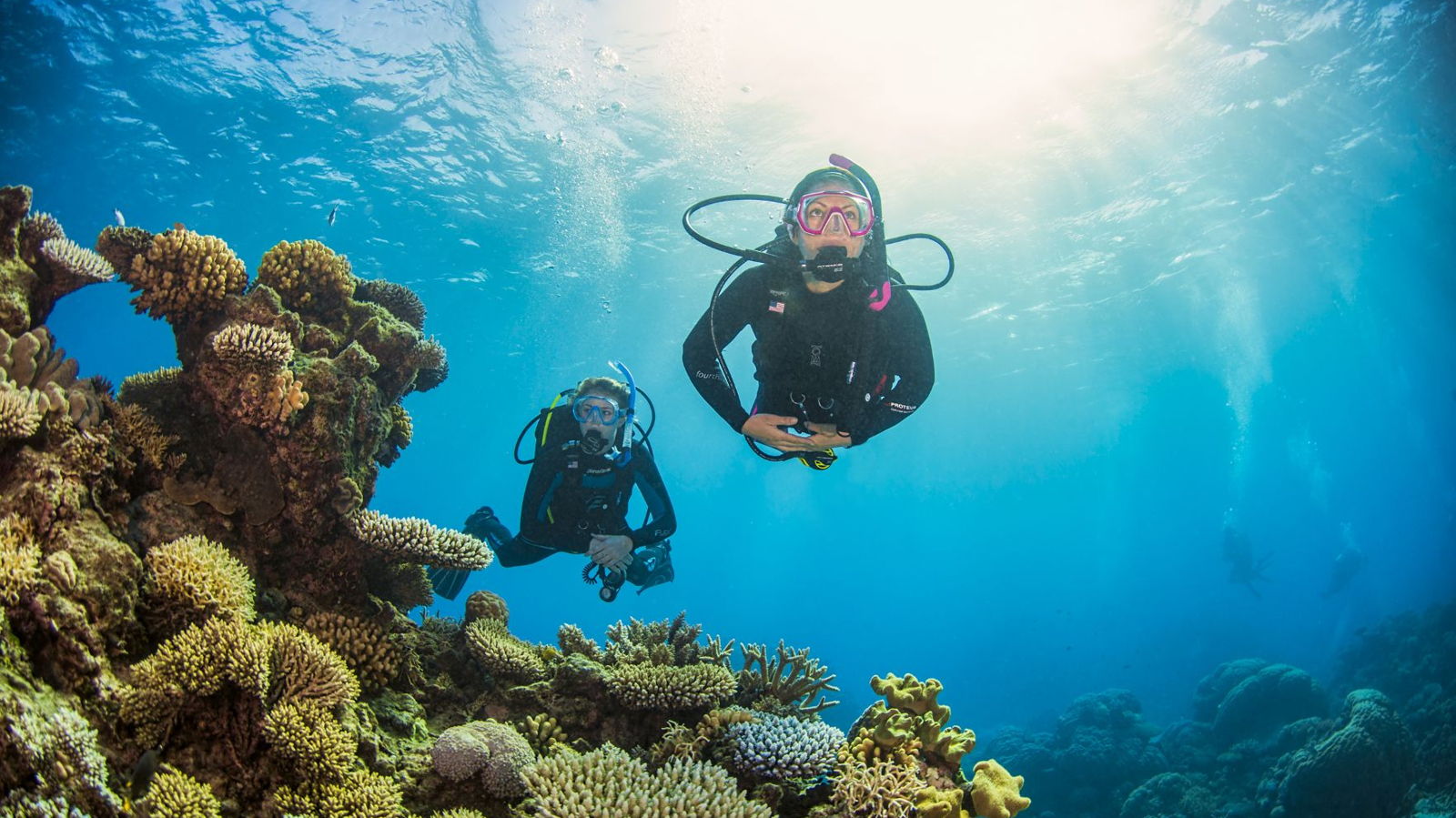
The reef
Hard and soft corals cover the rocks around the island, starting in about 2 metres of water. Further out the reef breaks into gullies, ledges, bommies and small drop-offs, and a ledge wall runs east–west along one side. Most dives stay between about 5 and 15 metres.
The island gives some shelter, which helps on days when the outer reefs are rough. Visibility is often lower than offshore, around 7 metres in summer and 12 metres in winter.
What lives here
Turtles rest in the shallows here, and it is known for its variety of nudibranchs and other small invertebrates. Expect reef fish such as butterflyfish, angelfish, wrasse, surgeonfish, damsels, pufferfish and gobies, plus lionfish and moray eels in the ledges. Wobbegongs, crayfish and rays turn up too.
Where it is
What you might see
- Turtles
- Nudibranchs
- Moray eels
- Lionfish
- Butterflyfish and angelfish
- Wobbegong sharks
- Rays
Nearby sites
- Boat dive · Off Mooloolaba, Sunshine Coast Ex-HMAS BrisbaneA former Royal Australian Navy guided missile destroyer, scuttled in 2005 as an artificial reef and dive site off the Sunshine Coast. It sits upright on sand in 28 metres, about 9 km by boat from the mouth of the Mooloolah River.
- Boat dive · Off Mooloolaba, Sunshine Coast Gneering ShoalsThe Inner and Outer Gneering reefs are subtropical reefs a short boat ride off Mooloolaba, with many named dive sites. Most sites sit between about 10 and 25 metres.
