
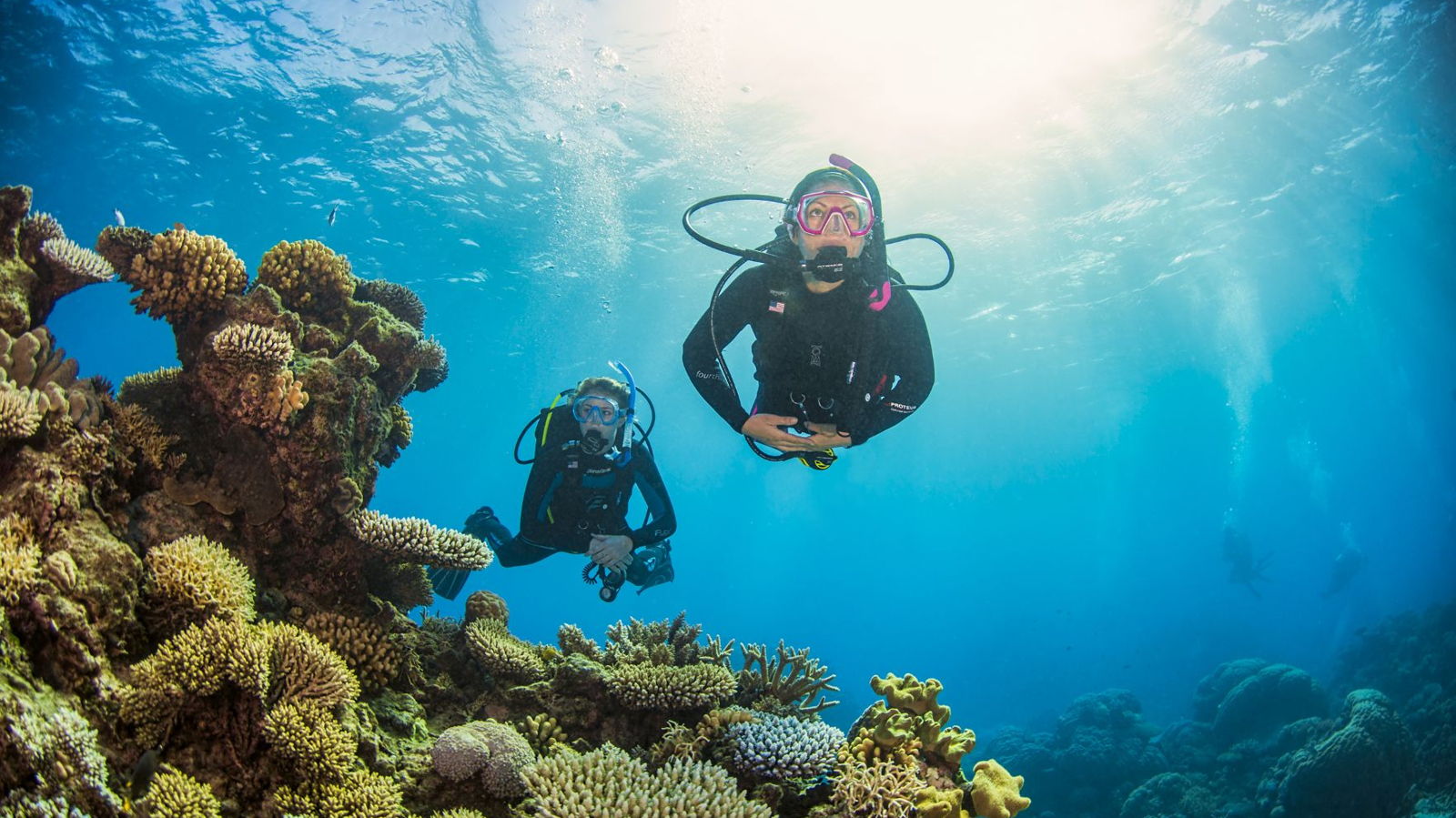
The reefs
Rocky outcrops rise from the sand to form ledges, gullies, overhangs, small caves, swim-throughs and pinnacles, covered in hard and soft corals. Many sites suit Open Water divers at 15–20 metres. The deepest parts, such as Magic Mountain on the Outer Gneerings at about 25 metres, are better for experienced divers.
Murphys Reef, further out, is deeper again and is usually dived by Advanced or deep-trained divers.
What lives here
The Sunshine Coast reefs are known for their range of nudibranchs. Look for anemones with clownfish, moray eels, crayfish and wobbegongs under the ledges, and schools of reef fish such as morwong, wrasse, leatherjackets, batfish, butterflyfish and angelfish. Turtles and gropers are also seen.
Conditions
Visibility is typically 10–15 metres, often better in winter. Water is about 26°C in summer and about 19°C in winter, when a thicker wetsuit and hood help. Humpback whales pass the coast from about July to November.
Where it is
What you might see
- Nudibranchs
- Clownfish and anemones
- Wobbegong sharks
- Moray eels
- Crayfish
- Turtles
- Morwong, wrasse and batfish
Nearby sites
- Boat dive · Off Mooloolaba, Sunshine Coast Ex-HMAS BrisbaneA former Royal Australian Navy guided missile destroyer, scuttled in 2005 as an artificial reef and dive site off the Sunshine Coast. It sits upright on sand in 28 metres, about 9 km by boat from the mouth of the Mooloolah River.
- Boat dive · Off Mudjimba, Sunshine Coast Mudjimba (Old Woman) IslandA small island a short boat ride from Mooloolaba, ringed by shallow coral reef. It suits snorkellers and new divers as well as macro photographers.
